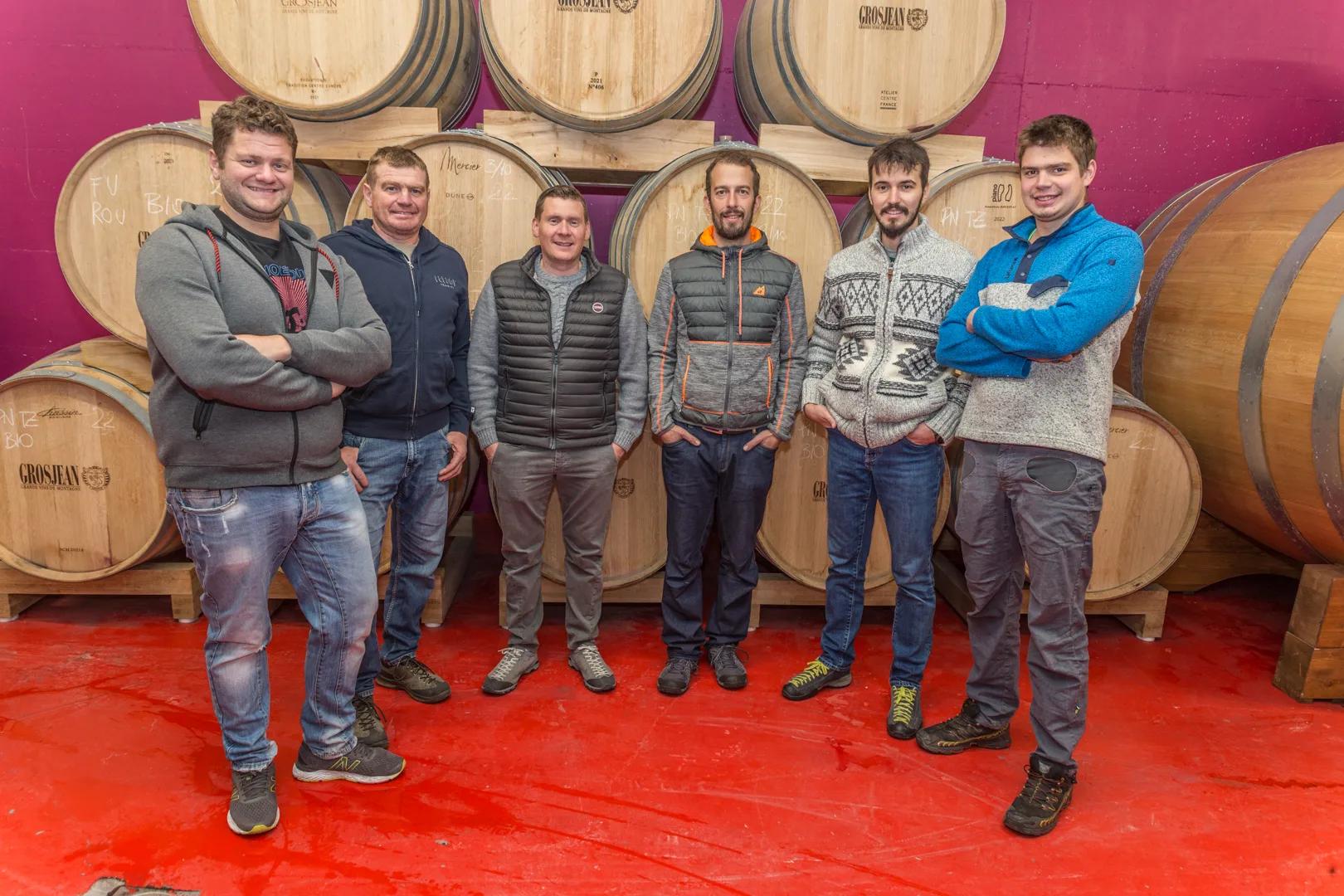
The Grosjean family in the cellar, in front of the barrels

About us

One family, four centuries of vines

The Grosjeans have lived in the Aosta Valley since the 1600s. In 1968 grandfather Dauphin decided to make a living from wine; today we are the third generation to do so, in Quart, among the vineyards of Rovettaz and Tzeriat.

Grandfather Dauphin Grosjean

Bien faire et laisser dire.

Grandfather Dauphin’s motto: do well, and let them talk

Our story

  1. 1371

    The wine of Ollignan

    Wine was already made where the winery stands today. On 1 December 1371 Jeannot, son of André d’Alignyan (Ollignan), left the church of Quart a cow, a pig, rye, wheat and “un setier de bon vin”, plus wine and bread for the Rogation procession.

    Archival research by Rudy Sandi, Aosta Valley ampelographer

  2. 1378

    The castle saved by wine

    A fire starts in the chimney of the tower of Quart castle. The water pipes burn, and it is put out with the wine from the castle cellar: nine moggi, almost 4,800 litres.

    Archival research by Rudy Sandi, Aosta Valley ampelographer

  3. 1600s

    The Grosjeans arrive

    After the plague of 1630 the Duke of Savoy invites families from Savoy and Burgundy to repopulate the valley. The Grosjeans settle on the Envers, between Chambave and Fénis, and for generations grow vines and trade wine, as the notarial deeds in the regional archives show.

  4. After the war

    Grandfather Dauphin and grandmother Michelina

    After a decline in the late 1800s, grandfather Dauphin, the son of an orphan, starts again from his wife Michelina Cachoz’s land near the Creton farmstead in Quart. In the 1960s he plants Tzeriat, our oldest vineyard.

  5. 1968

    The first bottle

    Dauphin bottles his first wine for the second Exposition des Vins du Val d’Aoste. Its success convinces him: you can live from wine.

  6. 1970s-1990s

    Five sons and Rovettaz

    With his sons Vincent, Giorgio, Marco, Fernando and Eraldo the family gives up other crops for the vine. Quality wines and native grapes come back; Rovettaz, left to the woods for centuries, is reborn.

  7. 2000

    The new winery

    Today’s winery is built at Ollignan, for the harvests and the first visitors. The United States, then Japan, become important markets.

  8. 2011-2024

    Organic

    In 2011 we began the conversion; from 2015 to 2024 our wines were certified organic. In 2015 the winery was enlarged: we then made 140,000 bottles.

  9. 2018

    The third generation

    Hervé, Didier, Simon and Marco take over. Eraldo, of the second generation, works with us every day.

In the cellar among the 1991 Torrette and Pinot Noir casks
The Grosjean family in the vineyard, in winter

Who you’ll meet at the winery

Sons, brothers, cousins. We tend the vines, make the wine and welcome you at the winery.
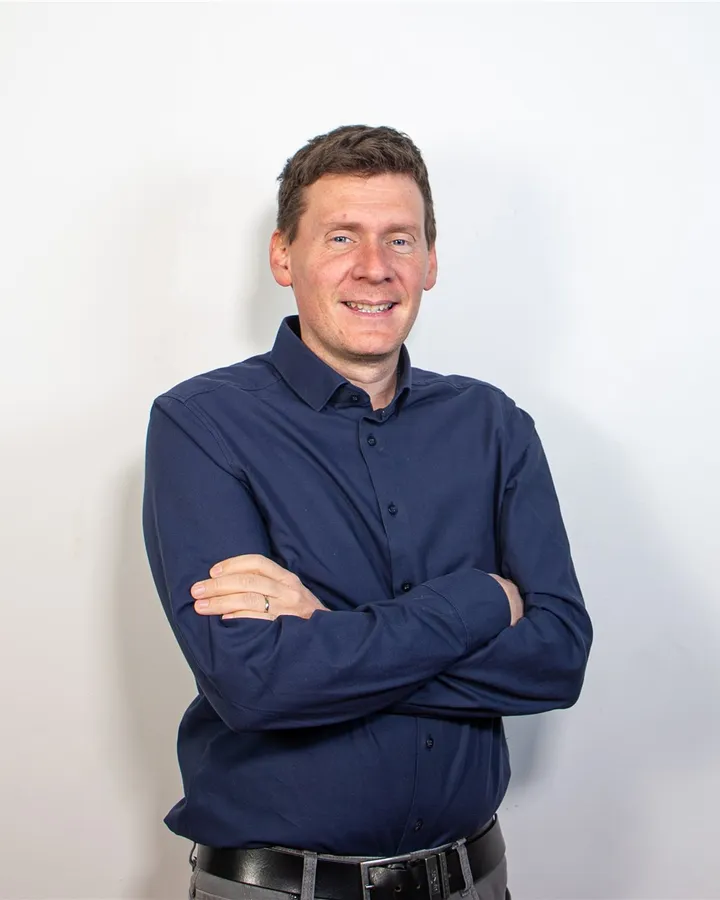
Hervé

Hervé

Winemaker and agronomist

Raised among our vines, he graduated in viticulture and oenology in Alba in 2012 and that same year founded a small farm, an offshoot of the family company. Since 2015 he has been the winery’s winemaker and looks after the vineyards; off duty, he mountain-bikes.
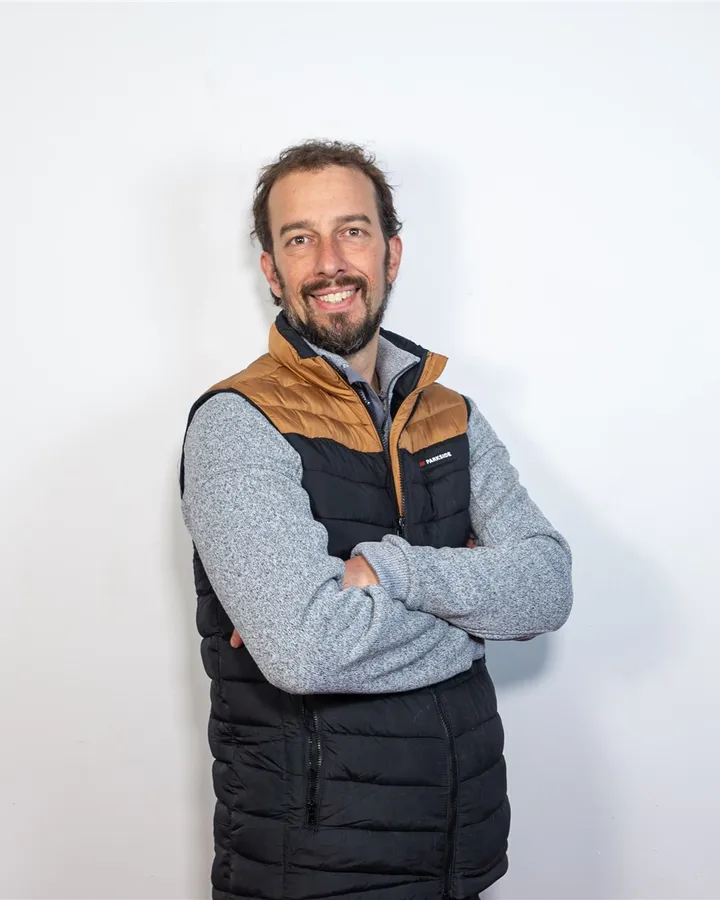
Marco

Marco

Vineyards and machinery

Born in 1984, he has loved wood since childhood and trained as a carpenter. In 2014 he joined the company as tractor driver and co-manager of the vineyards through their whole cycle. Every year he shows his woodwork at the thousand-year-old Saint-Ours fair.
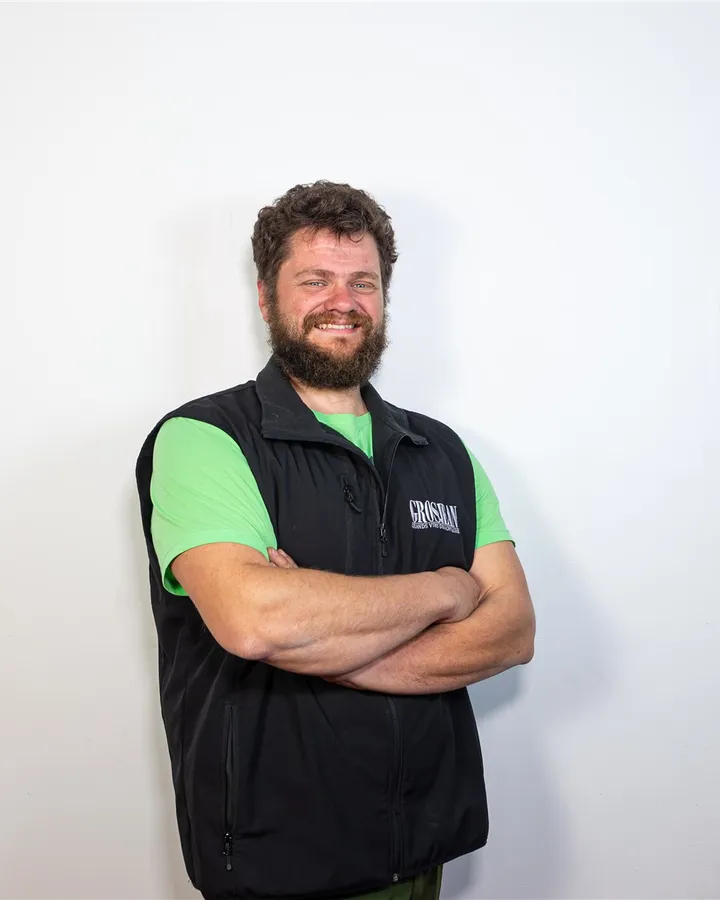
Didier

Didier

Vineyard and tastings

After years in the car and farm-machinery trades, he became a partner in early 2018 and follows the vineyard from pruning to harvest, through to tastings at the winery. He loves engines and bees: for years he has made honey from his own hives.
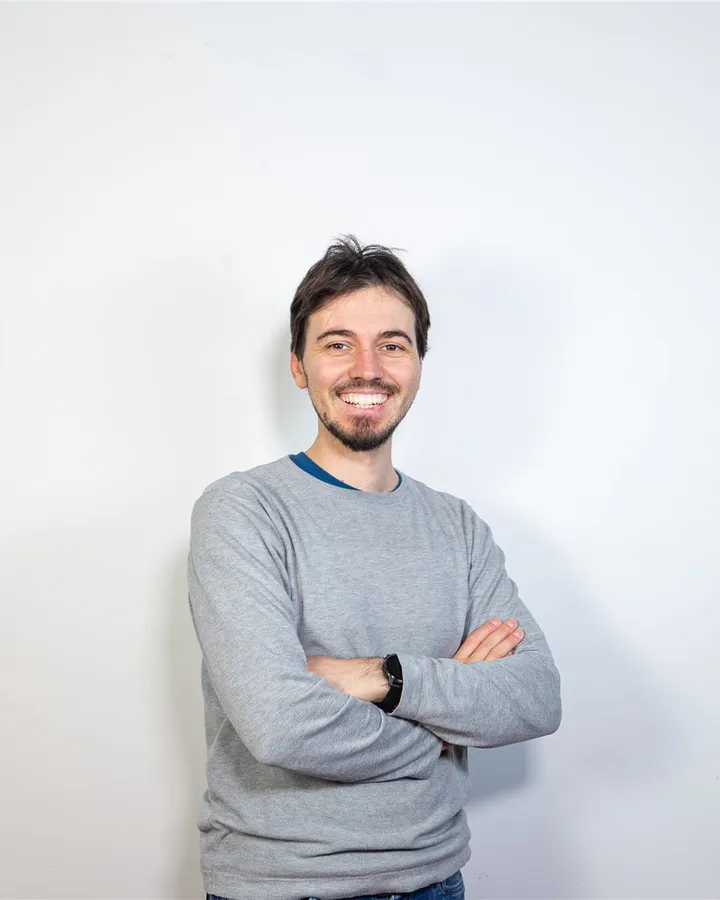
Simon

Simon

Sales and export

A doctor, graduated in Turin in 2014, he works in emergency medicine and runs an acupuncture and integrative medicine practice. At the winery he handles export, administration and online sales. Whenever he can, he is in the mountains: mountain biking, climbing, mountaineering.
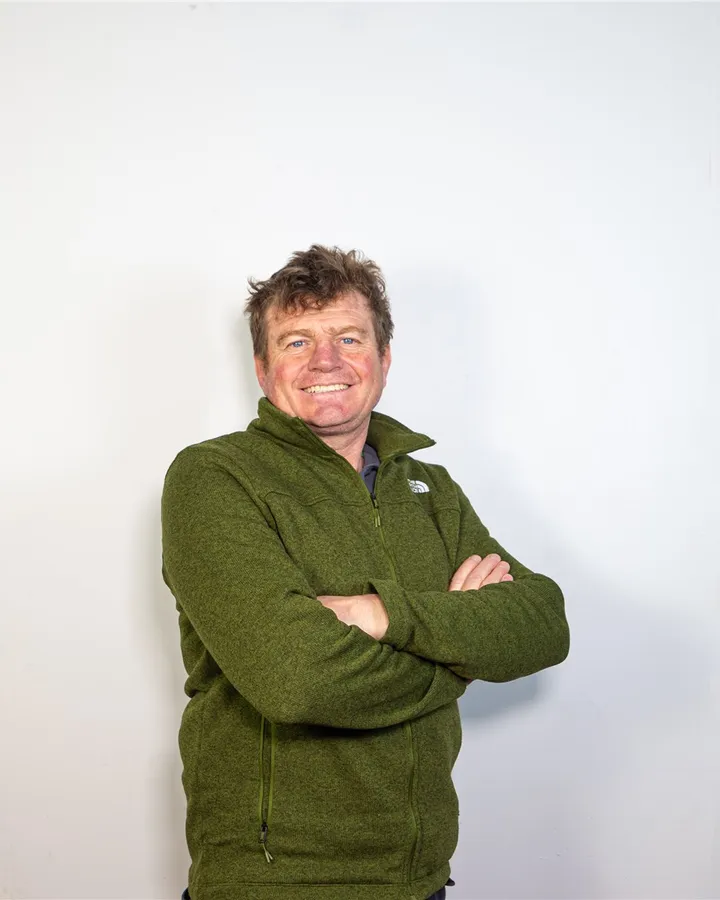
Eraldo

Eraldo

Second generation

One of Dauphin’s five sons. From 1987 he worked at the farmers’ consortium with his sister Rita; in 1991 he chose to give all his energy to the family company. An expert tractor driver, he does the machine work in the vineyards and the main cellar work. He still plays football in the Aosta Valley Masters tournaments.
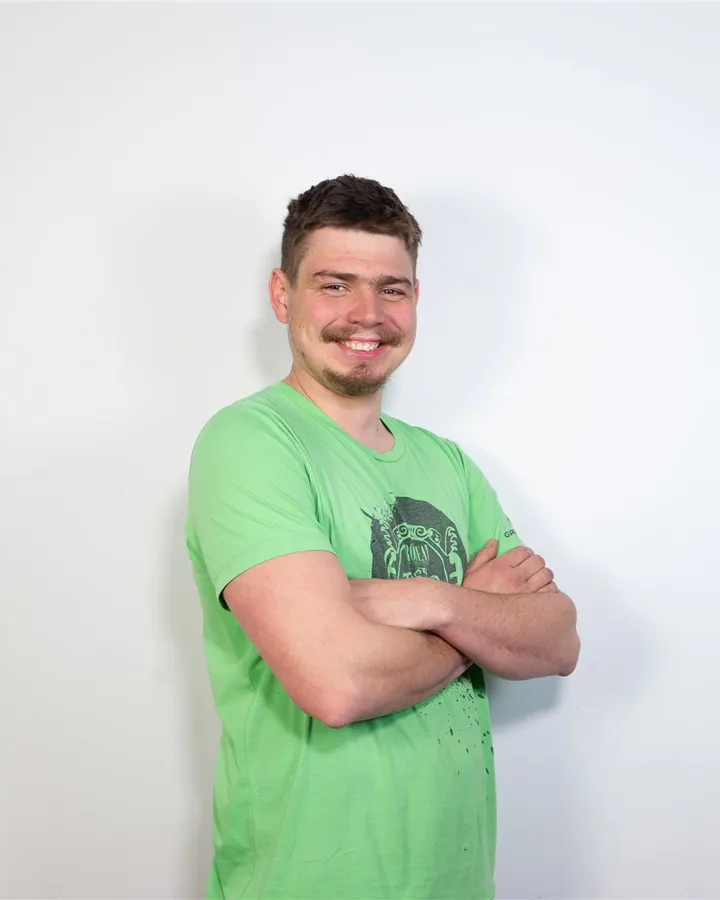
André

André

Cellar master

Eraldo’s son, for years our cellar hand: he follows the wines from tank to bottle.
How we work

Mountain vineyards, by hand

On our slopes nearly everything is done by hand: 700-800 hours of work per hectare, five times the Italian average.

The soil

We work under the rows so that sandy soil that tends to compact can breathe; after harvest we sow a flowering cover crop, laid down in spring as mulch. Irrigation is by drip, to save water.

Few treatments

The dry, windy climate lets us keep copper and sulphur to a minimum, with plant-based products such as essential oils and nettle macerations.

In the cellar, little and with care

Our style is traditional Aosta Valley: the best grapes, little intervention. When we can, we let fermentations start spontaneously; for reds we prefer punching down to pumping over.

Heroic viticulture

CERVIM calls a vineyard heroic when slopes exceed 30%, above 500 metres, on terraces or steps. All of ours are: Rovettaz and Tzeriat reach 80% slopes and climb to 900 metres; at Donnas the vineyards are terraced.

A changing climate is felt first in the mountains: we have strengthened irrigation, built water reservoirs and installed solar panels.

“For many decades I have come to the Aosta Valley, driven by the wish to know its wine history. Each time there is a new corner of these mountains to discover. There is no more beautiful place in the world than these valleys.”

Neal Rosenthal, importer and friend, United States

Awards